

CBK-CORF Compliance Services
Helping Financial Institutions Achieve Cybersecurity Compliance with Confidence.
Who Needs These Services:
Banks


Digital Banks
FinTech


Investment Companies


Payment Service Providers
Credit Companies


Business Challenges
Difficult Compliance
Financial institutions often struggle to interpret regulatory requirements and translate them into practical cybersecurity controls. Without a structured implementation approach, compliance efforts become inconsistent, time-consuming, and difficult to sustai



Regulatory Pressure
Continuous regulatory updates, supervisory expectations, and audit requirements place significant pressure on executive management. Organizations need a clear compliance roadmap to demonstrate governance, accountability, and ongoing improvement.
Internal and external audits frequently identify recurring control weaknesses, insufficient evidence, and incomplete documentation. Addressing these findings efficiently requires a systematic remediation process.
Audit Findings
Missing Documentation


Many organizations operate security controls without documented policies, procedures, standards, or records. This creates compliance gaps even when technical safeguards already exist.


Weak Governance
Ineffective governance structures often result in unclear responsibilities, poor decision-making, and limited executive oversight, reducing the organization's ability to manage cyber risk effectively.
Without a formal cybersecurity risk management process, organizations struggle to prioritize investments, evaluate threats, and align security initiatives with business objectives.
Poor Risk Management
Our services
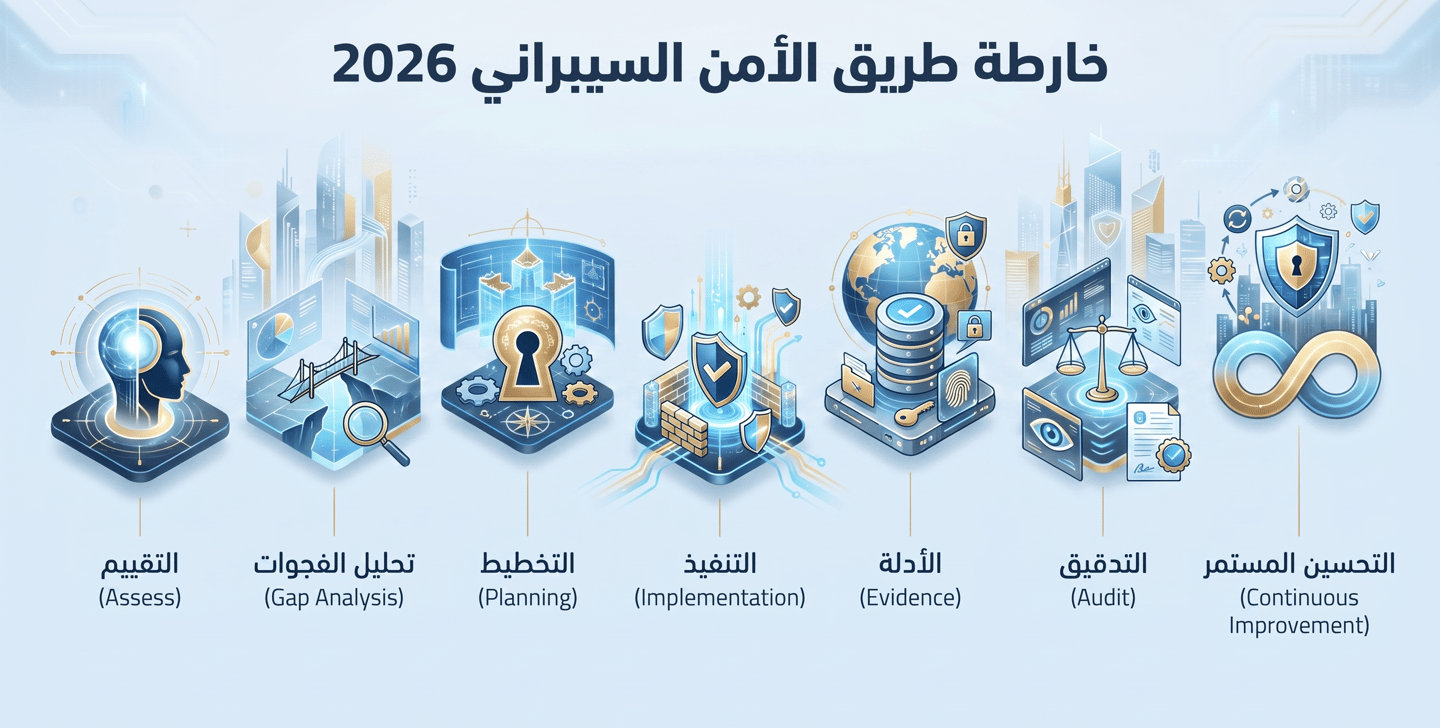
1. Gap Assessment
Identify compliance gaps before they become regulatory findings. We perform a comprehensive assessment of your organization's cybersecurity controls against the applicable regulatory framework, identify areas requiring improvement, prioritize remediation activities, and provide a detailed Gap Assessment Report with actionable recommendations and implementation priorities.
Deliverables
Gap Assessment Report
Compliance Score
Improvement Roadmap
2. Implementation Roadmap
Transform assessment findings into a practical implementation plan. Our roadmap defines priorities, milestones, responsibilities, timelines, and resource requirements to help your organization achieve regulatory compliance through a structured and measurable approach.
Deliverables
Project Roadmap
Milestone Plan
Implementation Schedule
3. Policy Development
Develop professional cybersecurity policies, standards, procedures, and operational guidelines aligned with regulatory requirements and international best practices. All documentation is tailored to your organization's business model and governance structure.
Deliverables:
Security Policies
Procedures
Standards & Guidelines
4. Cybersecurity Risk Assessment
Identify, analyze, and evaluate cybersecurity risks affecting your business operations. We establish a formal risk management process that enables executive management to prioritize mitigation activities and support informed decision-making.
Deliverables
Risk Register
Risk Treatment Plan
Executive Risk Report.
9. Vendor Assessment
Assess suppliers, vendors, and service providers to ensure they meet cybersecurity and regulatory expectations. We evaluate third-party security controls, contractual requirements, and operational risks before and during business relationships.
Deliverables
Vendor Assessment Report
Third-Party Risk Register
Improvement Recommendations
10. Awareness & Training
Deliver role-based cybersecurity awareness and compliance training for executives, managers, technical teams, and end users. Training programs are customized according to the applicable regulatory framework and organizational responsibilities.
Deliverables
Training Materials
Attendance Records
Awareness Program
5. Compliance Program
Build an enterprise-wide cybersecurity compliance program covering governance, documentation, implementation, monitoring, continuous improvement, and regulatory readiness. Our approach establishes a sustainable compliance capability rather than a one-time project.
Deliverables:
Compliance Framework
Governance Model
Compliance Dashboard
6. Evidence Collection
Prepare the documentation and objective evidence required during regulatory reviews, internal audits, and external assessments. We help organizations organize, validate, and maintain compliance evidence in a structured and audit-ready format.
Deliverables:
Evidence Repository
Control Mapping
Audit Documentation
7. Internal Audit Support
Support internal audit teams through cybersecurity compliance reviews, control validation, audit planning, evidence verification, and remediation follow-up to improve audit readiness and strengthen organizational assurance.
Deliverables
Audit Working Papers
Findings Report
Corrective Action Plan
8. Board Reporting
Provide executive-level cybersecurity reporting that enables senior management and board members to understand the organization's compliance posture, cybersecurity risks, implementation progress, and strategic priorities through clear and meaningful dashboards.
Deliverables
Executive Dashboard
Board Presentation
KPI Reports
Everything You Need to Know About CBK-CORF Compliance
1. What is the CBK-CORF Cybersecurity Framework?
The CBK-CORF Cybersecurity Framework is a regulatory framework issued by the Central Bank of Kuwait to strengthen cybersecurity governance, risk management, resilience, and operational security within regulated financial institutions. It establishes mandatory cybersecurity requirements designed to protect financial systems, customer information, and critical business services while ensuring continuous compliance with regulatory expectations.
2. Which organizations should comply with CBK-CORF?
CBK-CORF primarily applies to financial institutions regulated by the Central Bank of Kuwait, including banks, digital banks, payment service providers, financing companies, electronic money institutions, and other licensed financial organizations. Organizations working with regulated entities may also benefit from aligning their cybersecurity practices with the framework.
3. How can Cyber Advisory Hub help our organization?
We provide end-to-end compliance services covering Gap Assessments, implementation planning, cybersecurity governance, policy development, risk management, compliance documentation, evidence preparation, internal audit support, executive reporting, and staff awareness. Our objective is to help your organization establish a sustainable compliance program rather than simply completing a one-time assessment.
4. What is included in a CBK-CORF Gap Assessment?
Our Gap Assessment evaluates your organization's current cybersecurity posture against applicable CBK-CORF requirements. We review governance, policies, procedures, technical controls, operational practices, documentation, and supporting evidence. The assessment concludes with a comprehensive report highlighting compliance gaps, associated risks, and prioritized recommendations for remediation.
15. How do we get started?
Getting started is simple. Contact our consultants to schedule an initial consultation where we discuss your business objectives, regulatory obligations, current cybersecurity maturity, and compliance priorities. We will then recommend the most appropriate assessment approach and prepare a customized implementation roadmap tailored to your organization.
5. How long does a typical implementation project take?
Implementation timelines depend on the organization's size, complexity, maturity, and existing cybersecurity capabilities. Small organizations may complete implementation within several weeks, while larger financial institutions often require several months. Following the initial assessment, we develop a realistic implementation roadmap with defined milestones and priorities.
Still have questions?
Our cybersecurity compliance experts are ready to help.
Contact us today to schedule a confidential consultation and discuss your organization's compliance journey.
6. Do you develop cybersecurity policies and procedures?
Yes. We design and customize cybersecurity policies, standards, procedures, and supporting documentation aligned with CBK-CORF requirements and recognized international best practices. All documents are tailored to reflect your organization's business operations, governance model, and regulatory obligations rather than using generic templates.
7. Can you support our Internal Audit team?
Absolutely. We work closely with Internal Audit departments by validating cybersecurity controls, reviewing compliance evidence, supporting audit planning, analyzing findings, and assisting management in implementing corrective actions. Our services help strengthen audit readiness and improve overall governance.
8. Do you provide compliance documentation and evidence?
Yes. One of the most common compliance challenges is maintaining sufficient evidence to demonstrate regulatory compliance. We assist organizations in preparing, organizing, validating, and maintaining documentation and objective evidence required during internal audits, regulatory inspections, and external assessments.
9. Can you help us remediate audit findings?
Yes. We analyze existing audit observations, identify root causes, prioritize corrective actions, and develop practical remediation plans. Our consultants work alongside your management and technical teams to ensure that corrective actions are effectively implemented and properly documented.
10. Do you provide executive and Board reporting?
Yes. We prepare executive-level cybersecurity reports that present compliance status, key risks, implementation progress, performance indicators, and strategic recommendations in a clear format suitable for senior management and Board of Directors meetings. These reports support informed decision-making and effective governance.
11. Can you assess third-party vendors and suppliers?
Yes. Third-party cybersecurity risk is an important component of regulatory compliance. We assess vendors, service providers, and outsourced partners by reviewing their cybersecurity controls, governance practices, contractual obligations, and overall risk posture to help your organization manage supply chain risks effectively.
10. Do you provide executive and Board reporting?
Yes. We prepare executive-level cybersecurity reports that present compliance status, key risks, implementation progress, performance indicators, and strategic recommendations in a clear format suitable for senior management and Board of Directors meetings. These reports support informed decision-making and effective governance.
11. Can you assess third-party vendors and suppliers?
Yes. Third-party cybersecurity risk is an important component of regulatory compliance. We assess vendors, service providers, and outsourced partners by reviewing their cybersecurity controls, governance practices, contractual obligations, and overall risk posture to help your organization manage supply chain risks effectively.
12. Do you provide cybersecurity awareness and training?
Yes. We deliver customized awareness and training programs for executives, managers, technical staff, compliance teams, and end users. Training sessions are aligned with regulatory requirements and focus on improving cybersecurity culture, regulatory awareness, and operational responsibilities throughout the organization.
13. Is compliance a one-time project?
No. Cybersecurity compliance is a continuous process rather than a one-time implementation effort. Regulatory expectations evolve, cybersecurity risks change, and business environments continuously develop. Organizations should regularly review controls, perform periodic assessments, maintain documentation, and monitor compliance to ensure ongoing regulatory readiness.
14. What makes Cyber Advisory Hub different?
Cyber Advisory Hub combines over three decades of practical information technology, governance, risk management, cybersecurity, and regulatory compliance experience. Our approach focuses on delivering practical implementation guidance, measurable business outcomes, and long-term compliance sustainability instead of simply producing reports or documentation.